

The gut is not the BEGINNING Part 2

The Gut Is Not the Beginning
I want to start in a place that might seem unrelated, but over the years I’ve learned that the places that feel unrelated are usually the doorway.
Today, as I was sitting down to record this, I noticed something in myself.
A nervousness.
That is interesting for me to even say out loud, because I do not often feel that when I do this. I have been doing this for a long time. I am comfortable here. And yet, there it was.
A subtle anxiousness sitting in my chest.
There was a moment where I almost bypassed it. There is still a part of me that wants to show up clean, composed, certain. But what I have learned, both in my own work and with clients, is that the moment you bypass what is actually happening in you, you lose the thread.
So I stayed with it.
And I want to start here because what we are talking about today, gut permeability, digestion, immune response, all of it, does not begin where most people think it begins.
It does not begin in the gut.
Where digestion actually starts
If I asked you where digestion begins, most people would say the mouth.
Some might say the stomach.
From a mechanical perspective, that is true.
But let’s zoom out.
What if digestion starts in your eyes.
What if it starts in your brain.
What if it starts in the moment you reach for food.
Are you choosing what you are about to eat or are you reacting.
That is not a philosophical question. That is physiological.
Your body is already responding before food ever enters your mouth.
Salivation begins.
Enzymes begin to prepare.
Your nervous system begins to orient.
There is an enzyme in your saliva called amylase. Its job is to begin breaking down carbohydrates. Genetically, we all produce different amounts of it.
That means before we even get into the gut, there is already variability in how we process food.
Some people handle carbohydrates well.
Some do not.
We have not even swallowed yet.
Before the gut, there is the environment
Now take it a step further.
You are eating.
But where.
In the car.
Watching something intense.
Scrolling.
Arguing.
Rushing.
We have normalized this.
Physiology does not see it as neutral.
If you are driving 60 miles an hour and eating, your body is not in a relaxed state. Even if you feel fine. Your physiology is tuned up. It is prepared for impact.
Same thing if you are watching something stressful. Same thing if you are in conflict.
Your system is in a sympathetic state.
Fight or flight.
Your immune system becomes more alert.
More reactive.
So now you eat.
Those proteins, those food particles, those antigens enter your system in a state where your immune system is already elevated.
What happens.
More reactivity.
More tagging.
More inflammation.
And we have not even reached the gut.
Chewing is not a small thing
Stay upstream.
Chewing.
It seems basic. It is not.
If you do not chew your food properly, you are sending larger, less processed particles into your stomach.
Your body now has to work harder.
More work means more stress.
More stress increases the likelihood of undigested food particles moving further down the digestive tract.
In your saliva, your immune system is already tagging what is coming in.
Identifying what is safe and what is not.
So before the stomach, before the gut, there is already an immune conversation happening with your food.
The stomach is not doing what you think it is doing
Now we move into the stomach.
Hydrochloric acid.
HCl.
Its job is to break down proteins and protect you from pathogens, parasites, and unwanted organisms in your food.
Most people today are not producing enough HCl.
Stress alone is enough to reduce stomach acid production.
Add in poor sleep, artificial light exposure, age, antacids, certain dietary patterns, and you have a system that is underproducing one of its primary tools.
So what happens.
Proteins are not fully broken down.
Pathogens are not neutralized effectively.
There is another layer most people miss.
HCl signals the pancreas.
When stomach acid drops to a certain pH, it tells the pancreas to release digestive enzymes.
If HCl is low, enzyme release is reduced.
Now you are not breaking down fats, proteins, or carbohydrates effectively.
Now you have more undigested material entering the gut.
Now we arrive at the gut
Food enters the small intestine.
This is where absorption is supposed to occur.
This is where nutrients are taken in to support every system in your body.
If everything upstream has not been handled well, this is where the system begins to show it.
Undigested food particles.
Increased immune activation.
Higher inflammatory load.
Over time, this contributes to gut hyperpermeability.
The gut is designed to be permeable.
It must be.
That is how nutrients enter circulation.
Hyperpermeability means those tight junctions are opening more than they should.
Now things cross into circulation that were not meant to.
Food antigens.
Bacteria.
Environmental toxins.
Your immune system responds to all of it.
Stress is the thread through all of this
We can talk about mechanisms.
HCl.
Enzymes.
Microbiome.
Tight junctions.
There is a common thread.
Stress.
Not only emotional stress.
Physiological stress.
Digestive stress.
Environmental stress.
Your body does not differentiate.
When stress becomes chronic, inflammatory cytokines increase.
At the same time, your body produces cortisol to regulate inflammation.
If cortisol is elevated chronically, your cells begin to become resistant to it.
Now inflammation is harder to turn off.
Low grade. Chronic. Systemic.
Inflammation is a central pathway in many chronic diseases.
The loop
Bring it together.
You are stressed.
You are not digesting well.
HCl is low.
Enzymes are low.
Food is not broken down properly.
The immune system becomes more reactive.
The gut becomes more permeable.
More substances enter circulation.
Inflammation increases.
Stress increases.
It feeds back.
Inflammation affects the brain.
The brain affects the gut.
The gut affects digestion.
The loop continues.
And then we blame the food
Gluten.
Dairy.
Carbohydrates.
These can matter.
But if your system is in a chronically stressed and reactive state, your tolerance is reduced.
You will react to more things.
Foods that were once tolerated may no longer be.
Not necessarily because the food changed.
Because your system did.
The part that matters most
After years of doing this work, one pattern continues to show up.
We are not lacking information.
There is no shortage of knowledge.
What is missing is something deeper.
What is happening internally that shapes how you treat yourself.
You can understand digestion at a high level.
You can understand every mechanism.
If you are still eating in a state of stress
still rushing
still disconnected
still operating from inherited patterns
Your physiology will reflect that.
So the question is not only
What are you eating
It is
Who are you being when you eat
And deeper
What part of you believes you need to live this way
Until that is explored, the pattern repeats.
Different foods.
Different strategies.
Same underlying loop.
Closing
We will go deeper into the mechanisms.
We will continue to connect this.
For now, keep it simple.
The next time you sit down to eat
Pause
Not as a technique
As an observation
What state am I in right now
Because that state
Is where digestion begins
If you want to dive into the raw uncut version of this newsletter and the last one search no further 👇
Part #1
Part 2
Map I used to create videos and part #3 coming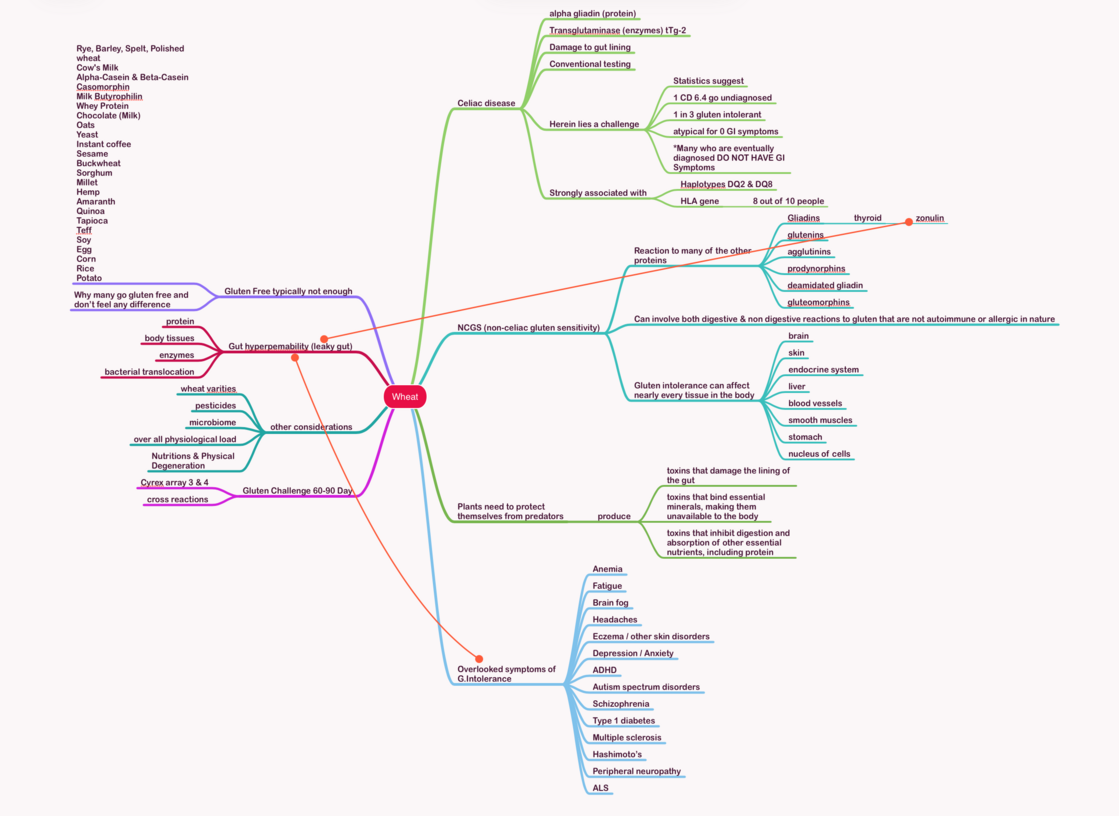

0 comments
Leave a comment
Please log in or register to post a comment